Transportation Industry
Introduction
My projects in transportation and logistics focus on making supply chains smoother and improving delivery times. I work on solutions to cut costs, optimise routes, and increase efficiency across logistics operations.
Unlocking Insights in Airline Flight Data: A Journey into Reliability
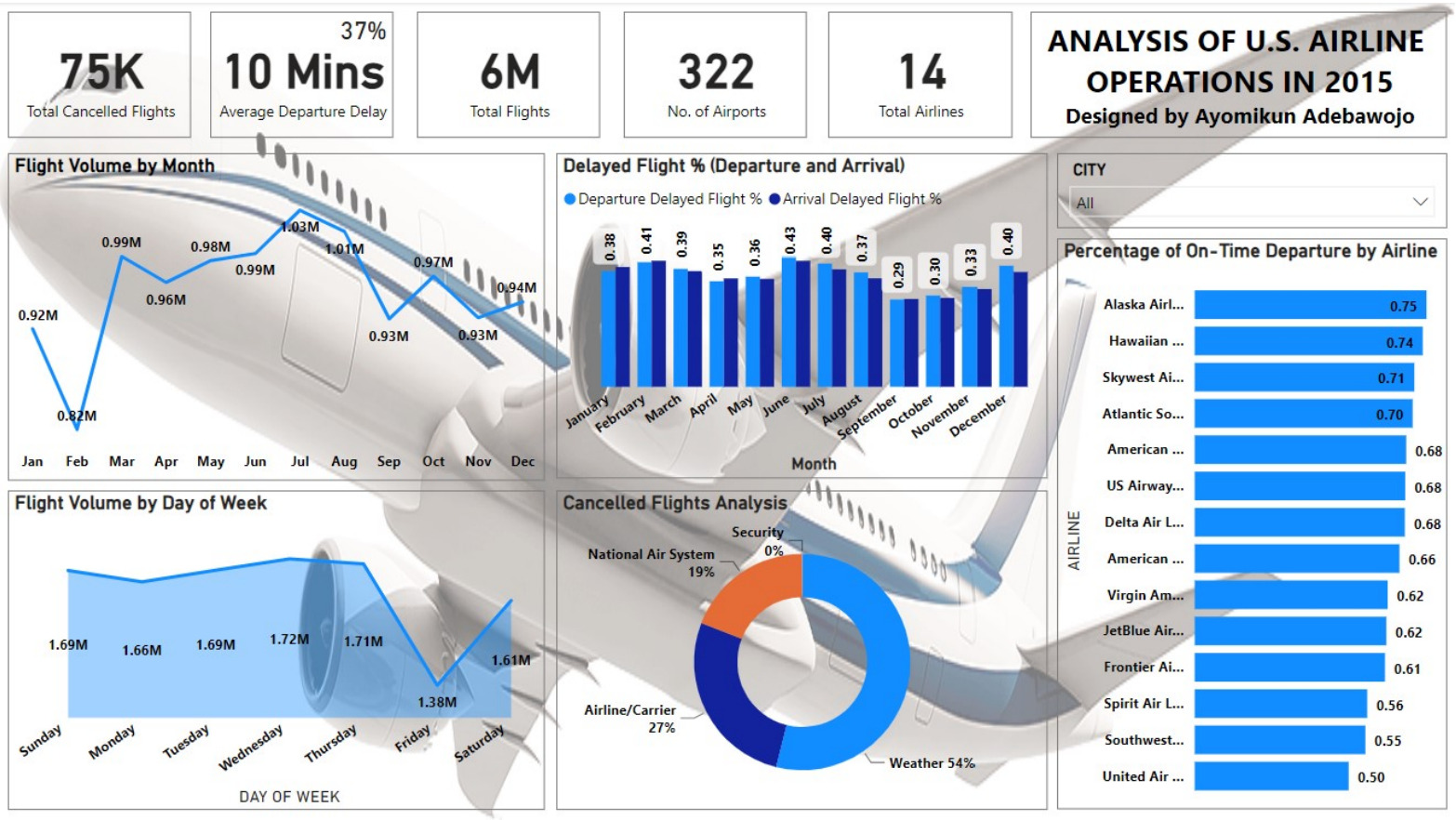
In this project, I analysed data from over 5 million commercial flights in 2015, examining trends in delays, cancellations, and flight volume to understand airline reliability patterns. Using PowerBI, I found that June had the highest departure delay rate at 43%, while September saw the lowest. A strong correlation was also observed between departure and arrival delays, indicating how one delay can ripple through the schedule. December showed unique discrepancies between departure and arrival delays, highlighting the need for focused operational strategies in peak travel months.
Key recommendations include optimising operations during high-demand months, enhancing proactive scheduling to minimise cascading delays, and improving customer communication during disruptions. By leveraging data analysis, airlines can refine their strategies to manage resources more effectively, improving overall reliability and passenger experience.
Revolutionising NYC Taxis with Data Insights
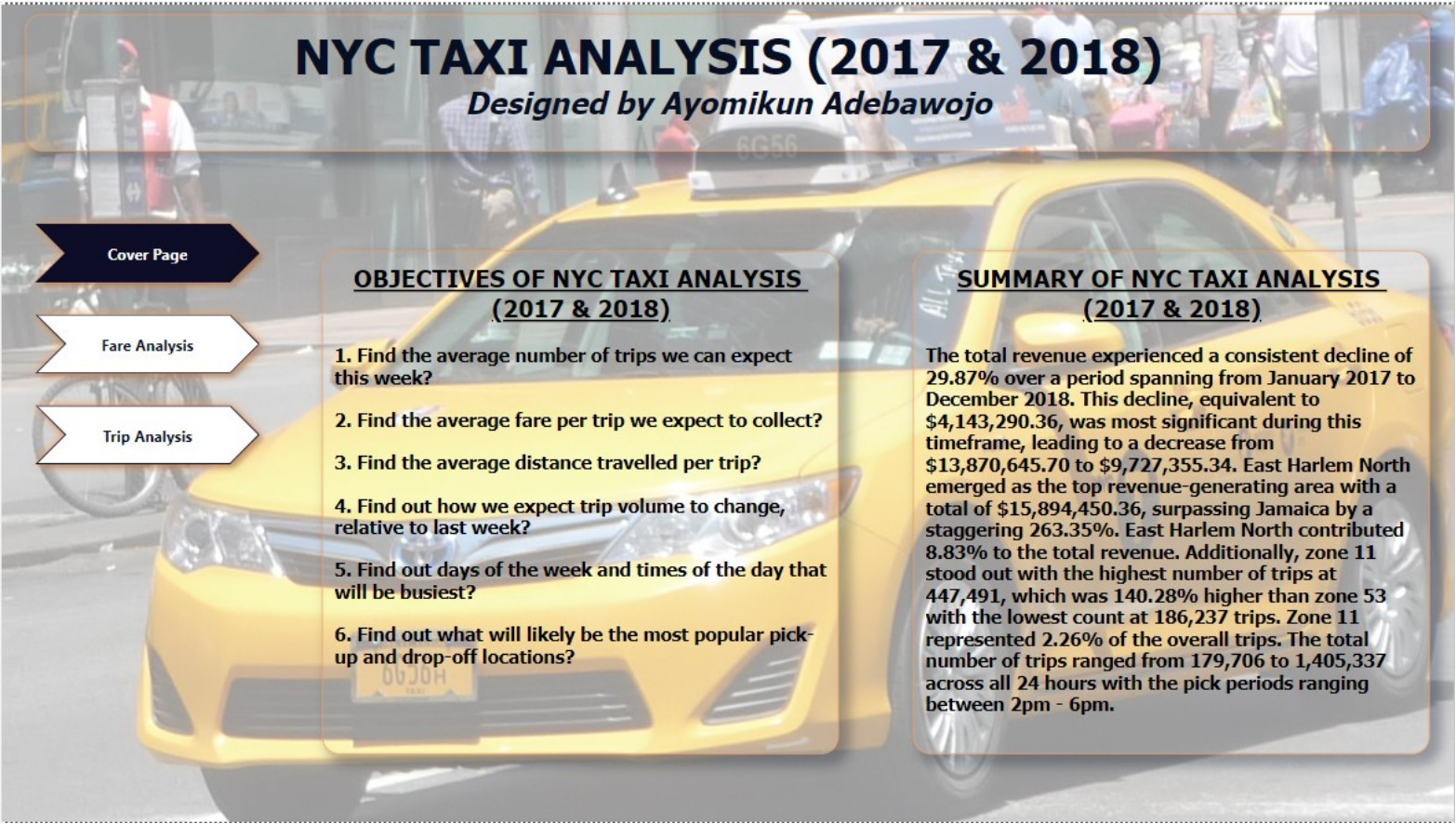
In this project, I analysed NYC Green Taxi data from 2017-2018, uncovering key trends to optimise operations. Findings revealed a 29.87% revenue drop and highlighted East Harlem North as the top revenue zone, with peak demand occurring at specific times, like 6PM daily and Saturday evenings.
Based on these insights, I recommended optimising taxi availability during high-demand periods, using dynamic pricing, promoting services in low-demand areas, and enhancing customer engagement through loyalty programs. These data-driven strategies aim to improve both revenue and service efficiency for NYC Green Taxi services.
Analysis on Shipping Ports Around the World
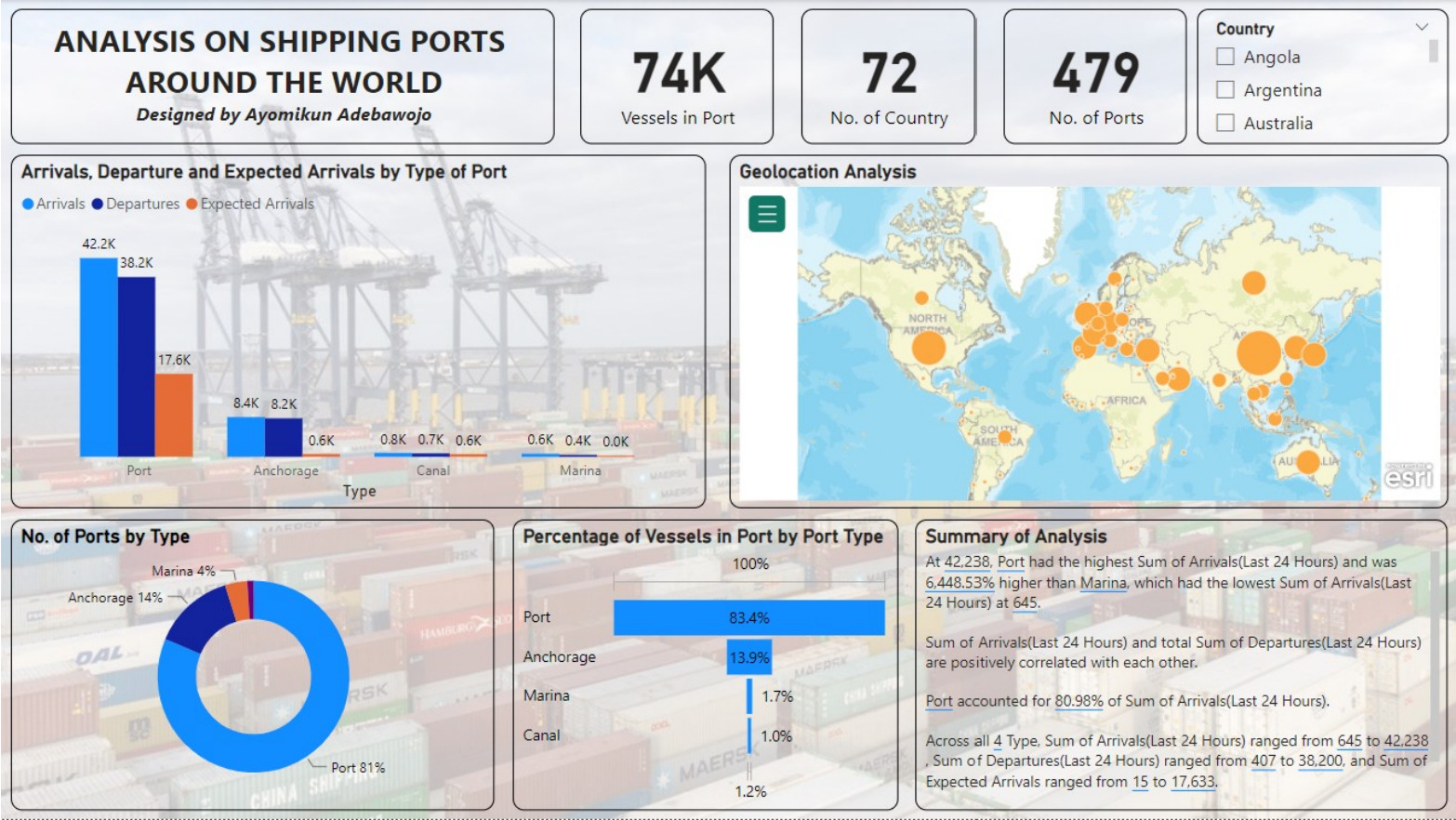
In this project, I analysed data from 479 global shipping ports, uncovering insights into the diverse roles and operational dynamics of ports, anchorages, marinas, and canals. Using PowerBI, I observed that ports accounted for over 80% of global maritime arrivals, emphasising their critical role in the supply chain. Additionally, a strong correlation between arrivals and departures underscored the importance of efficient operations to maintain the flow of goods worldwide.
Based on these findings, I recommended strategies for ports to enhance their competitive edge: investing in data processing and automation for operational efficiency, advancing workforce skills to meet industry demands, and developing market-access partnerships to expand their global reach. These steps aim to boost port performance and ensure a smoother, more resilient supply chain.
Navigating Airports Through the Pandemic
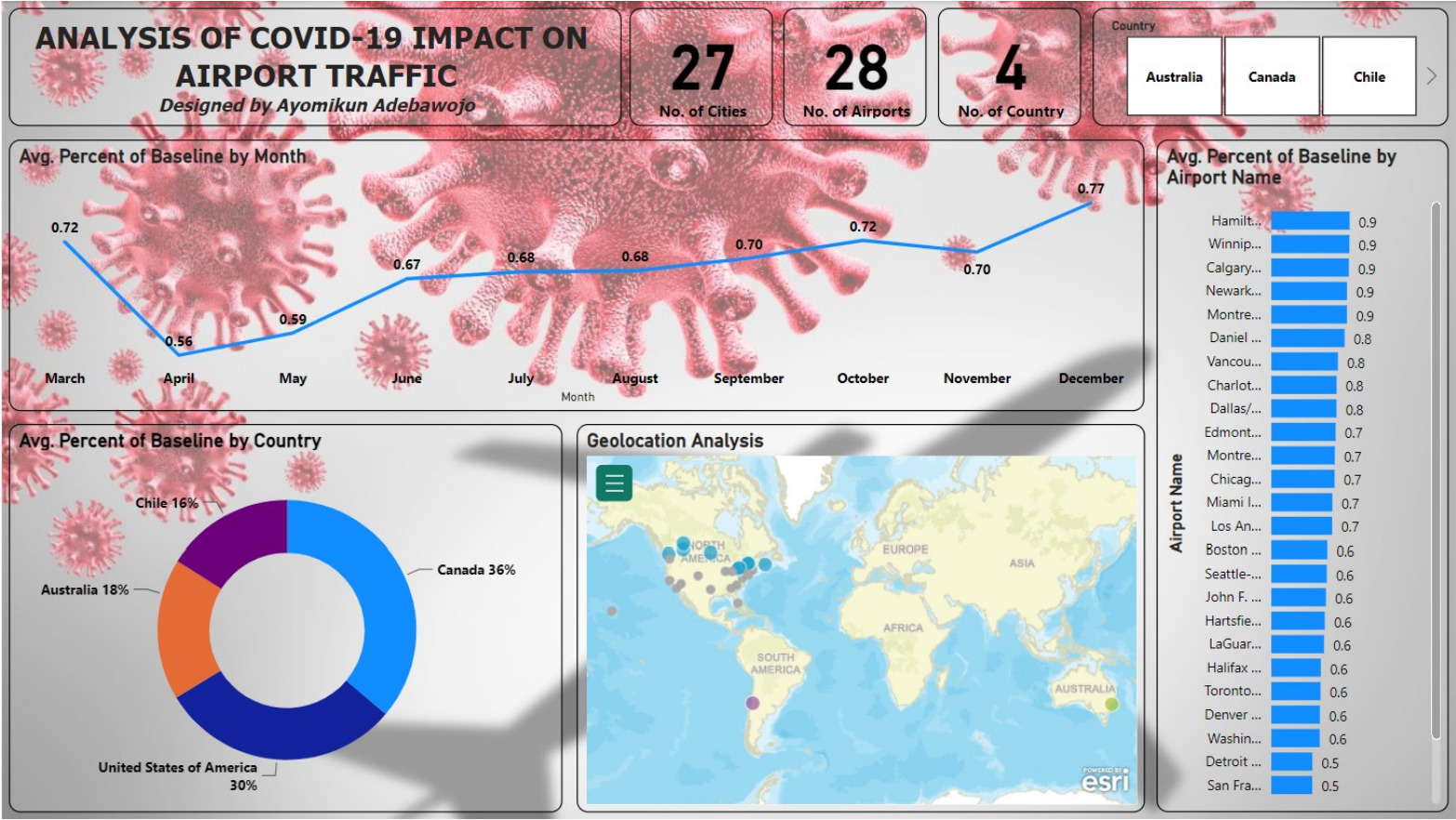
My analysis of COVID-19's impact on airport traffic, utilising PowerBI, uncovers key insights into travel patterns during the pandemic. December saw the highest average traffic at 77%, while April had the lowest at 56%. Notably, Canada led with a 36% average of baseline traffic, and airports like Hamilton and Calgary International achieved robust performance at 90%.
To aid recovery in the aviation industry, I recommend adaptive operations to manage fluctuating demand, tailored regional strategies, and focused airport-specific initiatives to enhance passenger experiences. Collaborating with stakeholders and embracing data-driven decision-making will be crucial for navigating the post-pandemic landscape and building a resilient aviation ecosystem.
Unlocking FMCG Supply Chain Insights: Powering Profits with Precision
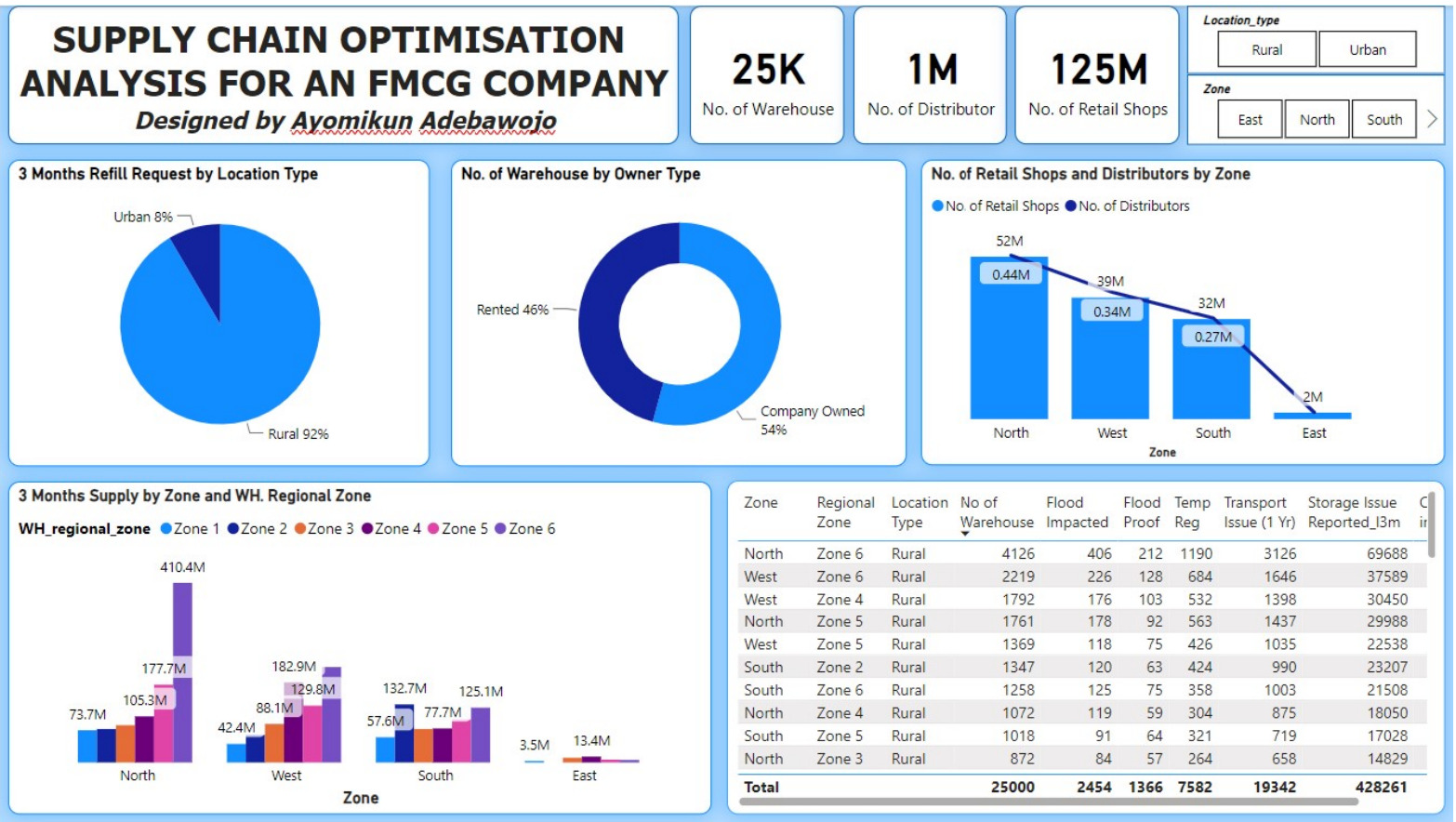
In my analysis of the FMCG supply chain for an instant noodles company using PowerBI, I identified key insights that can drive operational efficiency and profitability. Notably, Warehouse Zone 6 in the North accounted for 18.16% of the three-month supply, and the North region has 51,869,267 retail shops, significantly surpassing the East. These insights highlight opportunities for targeted supply adjustments and tailored advertising strategies.
To enhance performance, I recommend implementing regional campaigns, aligning retail and distributor strategies, and developing flexible approaches for urban and rural markets based on refill request patterns. Additionally, assessing the balance between company-owned and rented warehouses can optimise operations and reduce costs, creating a more efficient supply chain.